


Creating great content that answers your audience’s questions and is optimized to show up when they’re asking those questions of Google is a great way to drive traffic to your website, but it’s only the first step. It can take months for Google to index and categorize your content, which means it can take months before your content starts showing up in relevant searches.
But you don’t have months to wait around for traffic to start coming to your website, especially if you just wrote a blog post on a timely topic, such as the passage of a new law that affects your clients, or the introduction of a new software or technology that impacts your industry. By the time Google gets around to indexing and categorizing your content, it will no longer be relevant. Then there won’t be any searches for it because people will have already found their answers with the people who distributed their content on the subject and they’ll have moved on to something else.
Driving traffic to your content by distributing it as soon as it’s been published is not only a great way to drive organic traffic to your website, but it can also help boost the SEO of that particular piece of content (and your website overall). When Google sees organic traffic going to a piece of content, it takes that as a sign the content is valuable, and factors it into its rankings of that content. Yes, it seems like a catch-22 that you need to drive traffic to your site in order to boost its SEO so you can drive traffic to your website, but there are many factors that Google’s algorithm takes into account, and organic traffic is just one.
Table of Contents
Types of Content to Distribute
Now that we know why content distribution is important, let’s take a look at some of the types of content you can distribute.
Ebooks

Ebooks are incredibly valuable as a lead magnet. You can put them on your website as gated content so people have to give you their contact information in order to access it. If the rest of the content on your website has convinced them you know what you’re talking about, and promised the ebook will be full of valuable information, most high-quality leads will willingly hand over their information to get your book. Just be very careful you make it clear how you’ll be using their contact information in order to avoid violating the GDPR.
You can also publish your ebook and put it on other websites, such as Amazon, which gives you a better chance of getting in front of people who have never been to your website, and might never have heard of your brand. Additionally, it provides a nice backlink for your website, which can also boost your SEO.
And if you want to buy a copy of my book, you can do so here.
Videos

I love videos, not only because they are the future (and present) of content marketing, but also because they provide so many opportunities for both repurposing and distribution.
You can post your video online, then take just the audio and publish it as a podcast episode.
Then you can take the transcript of the audio and publish it as a blog post on your website.
One piece of content made one time, with just a bit of tweaking, can yield three different types of content.
That also gives you a chance to get on a variety of platforms. You publish the video on YouTube and the podcast episode on all podcast platforms, not to mention a blog post on your website.
Don’t forget the call to action in the video and podcasts to encourage people to visit your website, either by clicking on a link or giving them a URL that’s easy to remember.
Infographics
Infographics are popular because they can take a lot of information and condense it into one image. People are much more likely to engage with infographics, especially if you include interactive elements, such as links, so you definitely want to get the most out of them by distributing them all over the internet.
Testimonials and Success Stories
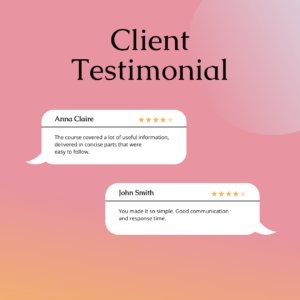
You can spend all day telling people what you do, but nothing will be as powerful as showing them the results you were able to get for your clients. Seeing how your clients’ lives were made better by your product/service will go a long way towards convincing warm leads to take that final step and buy from you, so use them for all they’re worth by distributing them as much as possible.
Webinars
If you record your webinars (which you should) you can keep the recordings (or links to the recordings) on a dedicated page of your website. That gives prospects a chance to browse your webinars, see what’s available and maybe view a few of them to get a taste of your expertise before closing the deal.
Blog Posts
Blog posts are very easy to distribute because they provide value in the form of knowledge and information. They’re also great for capturing leads in the early stages of the buyer journey, which means you should take advantage of that opportunity, not only by distributing your blog posts in all the usual places, but also think outside the box and distribute them in places where it will have an opportunity to get in front of prospects who might not be familiar with your brand.
Content Distribution
Now that we’ve taken a look at the types of content you should distribute, let’s look at some of your options for content distribution.
Newsletter

Your newsletter subscribers have already indicated they are interested in what you have to offer and want to hear from you when you have updates. Those updates could be when you have a new product/service to offer, or a special promotion you’re running, but many of your followers also want to know when you have a new blog post up on your website.
Keep in mind that your newsletter should be more than just a feed for your latest blog post. You should also have updates and insights into your business that only your subscribers get to see. Are you celebrating an anniversary? Welcoming a new team member onto your staff? Those are great examples of things you can share in your newsletter that will help your subscribers feel more connected to you and your business, rather than constantly trying to sell them something.
Social Media
I see a lot of small business owners focusing on growing their social media following without a strategy for converting those followers into customers. Social media can be a great way to spread the word about your business and increase your brand awareness, but if you’re in a B2B industry or you’re providing professional services, it’s unlikely you’ll be able to convert many leads from social media.
Instead, keep in mind that social media is just the top of the funnel and you want to encourage your prospects to take the next step in the buyer journey. Whether that’s subscribing to your newsletter, downloading your ebook, or something else entirely, chances are good you’ll need to get them to your website before they can take that next step, and a blog post is a great way to encourage them to click through to your website from social media. Just remember you need to give them a reason to click through – that means including a compelling image and crafting a thought-provoking snippet of text that makes them want to read more.
Having said that, it’s worth noting that social media posts containing links tend not to perform as well as posts that don’t contain links. Social media sites do everything they can to keep users on the site, so it makes sense for them to want to bury posts with links that could take users off the site, so where does that leave you?
Some people have gotten around that by putting links in the comments of their posts, rather than in the posts themselves. And don’t forget that you can always keep links to your website in your profile, so if you manage to grab someone’s interest with an engaging post, they can go to your profile to find the link to your website, where they can click through to learn more about you and your company. In order to do that, you’ll need to make sure you create exceptional posts with eye-catching images and compelling text snippets that make them want to know more.
Paid Media

Paid media is also a great way to “jump the line” so to speak and get your content in front of your target audience while Google’s algorithm is still working on indexing and categorizing your content. Let’s take a look at some of the most common options for paid media.
Social Media Advertising
Having mentioned that linkless social media posts tend to do better than posts with links, it’s worth pointing out that you can still create posts on social media containing links back to your website. Use the engaging posts without links to build your following and encourage engagement so they’ll be more likely to see the posts you publish containing links back to your website.
You can also take advantage of social media advertising to create posts with links back to your website. Social media sites won’t bury your post if they’re getting paid for each click through to your website from that ad.
Google Ads
The same goes for Google Ads. While you’re waiting for Google to index and categorize your content, you can get ahead of the game by paying Google to display a link to your new content when people use certain keywords. Rather than leaving the ad running indefinitely, you can just run it for a few weeks, maybe a month or two before your content starts organically ranking for that particular keyword.
Influencer Marketing
In some cases, you can pay some of the most influential people/websites in your industry to shout out your newest piece of content. I’ll get to earned media a little later, but influencer marketing is a great way to get many of the same benefits of earned media (social proof, positioning yourself as an authority, etc.) without actually having to earn it. That’s not to say your content isn’t valuable or high quality, it simply means you’re paying for exposure that appears organic, and that can go a long way towards convincing prospects you’re the real deal.
A Word of Caution When it Comes to Paid Media
Beware of the search intent behind your keywords. If someone is just looking for general information on a topic, chances are low that they’re ready to buy, in which case they could click on your ad (which is a click you’ll pay for), read your content and click away. If they do take an action before clicking away, it’s less likely to be an action that gets you money in the bank right away. Instead, they’ll probably subscribe to your newsletter or download a piece of information from your website, which will lead them further down the funnel, but it could be months or even years before they’re ready to give you their money (if ever).
That said, paid media can be a great way to get in front of prospects in the early stages of the buyer journey. If you’re strategic about leading them through the entire funnel, you’ll have a better chance of closing the deal when they are ready to buy.
Earned Media
Earned media is when someone else shares or talks about your content without getting paid for it. For example, if you were to write a guest post on someone else’s blog to promote your new ebook, that’s an example of earned media. Getting someone else to review your book is an example of earned media. Getting other people to share a link to your content on their own website or on their own social media channel is another example of earned media.
Earned media is incredibly powerful because it provides social proof that you’re an authority in your industry. If other people in your industry or related industries are referencing your content, that provides a signal to everyone who comes across it that you’re the real deal.
You can talk yourself up until you’re blue in the face, but it’s never going to be as effective as a single post or backlink from someone else, especially if that person/website is well respected in their industry. It’s also a great way to convince Google you’re the real deal, which helps your SEO.
I’ve already mentioned guest blogging, which is always a great way to get earned media, but I also recommend using CheckMyLinks, which is a Chrome browser extension you can use to check for broken links on a web page. As soon as you publish a piece of content, you can search for other content on related topics and check for broken links. If you find one, you can send a message to the author saying something along the lines of, “Hey, I noticed you have a broken link in your article on XYZ. I just published a new blog post on that topic and thought you might want to replace the broken link with one to my post, which you can find here,” and then you provide the link.
It’s a great way to get that earned media piece to your content distribution because it solves a problem for the author they might not have known they had. No one likes to have broken links on their website because that makes for a bad user experience, which could potentially harm their search rankings. By both alerting them to the problem and providing them with an instant and easy solution, they won’t have a reason to say no (assuming your email does not end up in their spam folder or get automatically deleted before it’s read, which is always a risk).
Conclusion
The more channels you use to distribute content, the more successful your strategy will be, but that doesn’t mean you need to use every channel. For example, as I already mentioned, paid media might not be the best for blog posts, but it could be great if you just published a new book or announced a new service and want to drive traffic to that sales page.
Whichever channels you decide to use, make sure you have data to back up that decision. Where is your audience hanging out and what kinds of content do they expect in each place? If they prefer images to links on social media, then it makes more sense to share your latest infographic there, rather than a link to your new blog post.
As always, feel free to play around with different channels for different pieces of content because there are always exceptions to the rule. Just make sure you test and retest every aspect of your strategy so you know what’s working, what isn’t, and you can adjust as needed.
If you found this content useful and would like to receive more of it directly in your inbox, you can sign up for our newsletter in the space below to make sure you never miss an update. You can also see what we’re up to by following us on LinkedIn, YouTube, and Facebook.
If you need professional help creating a content distribution strategy, we can help.
