

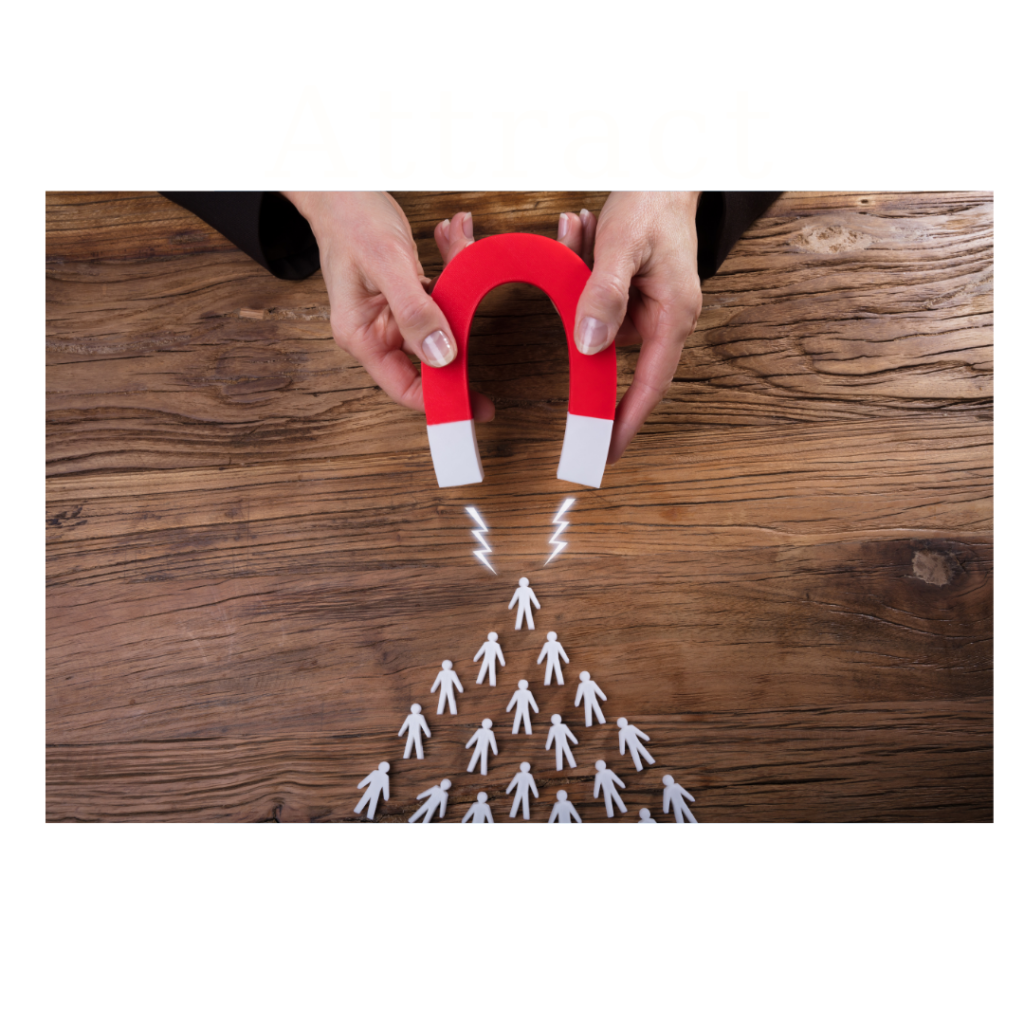
I had a conversation a while back with someone who’s still building her business the old fashioned way: identifying leads and calling them one by one on the phone to try and convert them into customers.
Initially, she didn’t see the value in content marketing because she thought of it as putting in all this work just to get one lead, but when content marketing is done right, one piece of content should bring in hundreds, if not thousands of leads to your website. It should act as a magnet that attracts and engages qualified leads for you, and once I explained it in those terms, she saw the light.
As it happened, I was talking about blogging, rather than lead magnets, but I still appreciate the fact that lead magnets earned that name because it perfectly describes how I think about content marketing: pulling qualified leads to you instead of forcing you to go out and catch them.
That said, there’s a right way and a wrong way to develop (and market) your lead magnets, so let’s go over everything you need to know to get the most out of your lead magnets.
Table of Contents
- Identify Your Target Audience
- Choose Your Medium
- Market Your Lead Magnet
- Make Sure Your Lead Magnet Is Evergreen
- Watch Out for the GDPR
Identify Your Target Audience

You need to know whom you’re creating the content for so you can make sure it’s tailored to that audience. That means it needs to address at least one of their pain points using language they understand, and in a way that is engaging.
If you want prospects to access your lead magnet and sign up for your newsletter, you need to know what kind of content would prompt them to take that action.
If you need help identifying your target audience, this blog post has some tips you should find useful.
Choose Your Medium
Once you’ve identified your target audience, you can find out which kinds of content they’re more likely to want to download, whether it’s an ebook, a checklist, an infographic, a video, etc.
It will also depend on the goal of that particular lead magnet. In most cases, when we talk about lead magnets, we talk about content that will prompt someone to subscribe to your newsletter, but maybe you have a different call to action for your lead magnet. For example, if you just wrote a book for your business, you might want to create a lead magnet to get people to buy the book, in which case, you might let them read the first chapter for free, and when they like what they read, they’ll buy the whole book. Or you could publish a companion workbook or worksheet to go along with the book, and once they’ve downloaded that for free and had a chance to look over it, they’ll be more likely to get the book to see all the valuable information in there.
Similarly, if you just released a course or training program, letting people have the first lesson for free and/or a companion worksheet/workbook is also a great way to give them a taste of what they can expect from the full course/program and prompt them to sign up for more.
Market Your Lead Magnet
Yes, your lead magnet is a piece of marketing content, but that doesn’t mean you don’t have to do marketing to get the word out about your marketing content. After all, no one can access your lead magnet if they don’t know it exists, so once it’s finished, take some time to spread the word. You can have a landing page devoted to it, but depending on the type of lead magnet, that won’t always be necessary.
At the very least, you should have a blog post that talks about either the same topic covered by your lead magnet, or a related topic. Your blog post should not cover the same content as your lead magnet, because if it does that, there will be no incentive for anyone to download the lead magnet after reading your blog post. Instead, your blog post should provide the reader with useful tips to establish your authority and expertise, but leave them wanting more so that, when you prompt them to download the lead magnet, they’ll have a reason to do so.
You should also talk up your lead magnet on social media, and depending on the goal of your lead magnet, you might want to promote it to your newsletter as well. While most people think of lead magnets as a funnel to grow your email list, and they certainly can be, don’t forget that a magnet can attract people to whatever the next stage of your funnel happens to be. That means it could be your email list, or it could be leading them directly to sign up to become a client, or it could be leading them to another piece of content entirely. Remember that you get to design your own digital marketing funnel however you want (as long as it makes sense for your target audience).
Make Sure Your Lead Magnet Is Evergreen

Because your lead magnet is most likely going to be something people will download onto their devices, you should make sure it’s evergreen. Hopefully, people will read/use the content as soon as they download it, but maybe they’ll save it somewhere to go over later. Or maybe they will peruse it right away and then move onto something else, only to come back to your lead magnet at a later date. If it’s outdated, they’ll delete it without giving it a second thought, but if it’s still useful, they’ll be more likely to reach out to you to take the next step in the buyer journey.
It’s also a good idea to spend your time and effort creating evergreen content because then you can get the most out of it and continue marketing it to new prospects for months, even years to come. That’s not to say you should only create evergreen content, because there is a time and a place for timely topics, but that’s not necessarily going to be your lead magnets.
Watch Out for the GDPR
Lead magnets are a great way to grow your email list, and by extension, grow your business. There’s a reason people have been using them ever since newsletters were invented, but the European Union caught onto this tactic businesses were using of getting people onto their email list without the user’s consent, or in some cases, even their knowledge they were signing up for someone’s newsletter.
As a result, the General Data Protection Regulation (GDPR) went into effect in May of 2018, and don’t think this doesn’t apply to you if you live and work in the United States. Remember that the internet was originally called the World Wide Web, and it came by that name honestly, so don’t assume that, just because you don’t serve people in the European Union, that means you don’t have to worry about its regulations, because you do. I’ve had people subscribe to my newsletter from Germany and the Netherlands, so if you have a website and a newsletter, you need to make sure you’re in compliance with the GDPR. Here’s what that means:
Don’t Require a Subscription as a Condition of Receiving the Lead Magnet

Prior to the spring of 2018, you could just tell people they need to give you their email address in order to access your lead magnet. I understood that meant I was signing up for their newsletter, but maybe that wasn’t clear to everyone, which is why the EU enacted the GDPR. Now, you can no longer require someone to sign up for your newsletter as a condition of accessing your lead magnet (this could be why gated content has become popular lately, but that’s a topic for another blog post).
Instead, you can require someone to give you their email address, but only so you can send them a follow-up email with the lead magnet. However, there’s nothing that says you can’t invite them to join your newsletter in that follow-up email. If they’re taking steps to actively request a piece of content from you, chances are good that they’ll want to keep receiving updates from you in the form of your newsletter, so don’t think the GDPR is hogtying you. Instead, it’s just making sure the only people who sign up to receive your newsletter are the people who are truly interested in receiving updates from you, and that’s a good thing. You don’t want people subscribing to your newsletter who aren’t interested in getting updates from you because that’s a great way to keep your open rate and click-through rate down.
Create a Separate Checkbox
By the same token, the same box in which they request the lead magnet to be sent to them can still ask them to subscribe to your newsletter as long as you use a separate checkbox to do so. The default for the checkbox needs to be unmarked so that people have to actively check it in order to sign up for your newsletter. No one wants to get a newsletter they didn’t realize they were signing up for, and you don’t want those subscribers anyway because they’re less likely to convert to customers.
Get Help from an Attorney
While I am familiar with the bounds of the GDPR, I am by no means an attorney, so if you are thinking of creating a lead magnet, make sure you get a good attorney to look everything over and make sure it’s legit before you hit that “publish” button.
If you found this content useful and would like to receive more of it, you can sign up for our own newsletter in the space below to make sure you never miss an update. You can also see what we’re up to by following us on LinkedIn, YouTube, Instagram and Facebook.
