


Have you ever entered a search term into Google, clicked on one of the top results, only to find information that had nothing to do with your question? It had the words you entered into the search bar, but not the answering you needed?
It’s frustrating. Sometimes you can just click back to Google and find another website with more relevant content. Other times you might need to tweak your search term until you find what you need.
If you can’t find anything that really answers your question, that might just be an example of a content gap, but if you’re able to fairly easily find another website that does answer your question, then the first website might have had the right keywords, but it had a lack of content relevance.
It’s easy enough to see why content relevance would be a problem from a marketer’s perspective. Getting leads to your website isn’t easy with all the competition out there, you can’t afford to let the ones who do find your website get frustrated and click away, never to be seen again. You need your content to grab their attention and keep them engaged until you can lead them to the next step of the buyer journey, but if your content isn’t relevant to the search term they used, you won’t get the chance to engage them, much less convert them into a customer.
To make sure this doesn’t happen to you, I’ll talk about how you can ensure all your web pages and blog posts have content relevance, but first, let’s look a little more closely at what content relevance is.
Table of Contents
Content Relevance Definition
Content relevance refers to how well the information contained in a particular piece of content corresponds to search queries for which that piece of content might rank. In order to determine content relevance, Google’s algorithm takes into account a variety of factors, including the text, but also images, video, and meta tags, such as the URL, image alt tags, headings and subheadings, etc.
Content relevance is not to be confused with topic relevance, which is concerned with backlinks.
Why Content Relevance Matters
The scenario at the beginning of this post is a perfect example of why content relevance matters: because you want to make sure you’re attracting the right leads and not annoying prospective customers. But it’s also important from an SEO perspective.
It’s rare that Google lets websites rank for a search term if they don’t have content relevance, but it does happen. Google’s not perfect, but it is constantly getting better and better at pairing search terms with content that answers the questions in those search terms, so before you can worry about your reader’s reaction to your content, you need to convince Google your website has content relevance.
That said, keep in mind that content relevance is just one of many, many aspects Google’s algorithm takes into account when deciding how to rank websites. If your website has content relevance, but it takes too long to load, and/or your website isn’t secure, your search engine rankings will suffer as a result.
How to Increase Your Content Relevance

Now that we’ve established what content relevance is and why it’s so important if you want to rank for certain keywords, let’s talk about the strategies you can use to make sure your website has content relevance.
Keyword Research
The first step is always to research your keywords. I’ve mentioned before the importance of making sure you do your keyword research before you even pick a topic, much less start writing your content. Before using a keyword in your content, you want to make sure that keyword gets a decent monthly search volume while also having a low SEO competition or keyword difficulty score (meaning there’s not too much other content already out there with this keyword).
While those two numbers are important, they’re not the only factors you should consider when researching keywords. You also need to take a look at the keyword’s trend (does it tend to get more searches during certain times of the year than others?), as well as your competition. If other websites are already ranking for that search term, take a look and see what those websites are. Are they your competition? Do they provide products/services in a related field, even if they don’t directly compete with you?
Don’t be afraid to go up against the heavy hitters in your industry when it comes to targeting certain keywords. If they’re targeting those keywords, that’s a good sign those keywords are getting used by your target audience to find out about the kinds of products/services you provide.
If you’re afraid your website won’t have a chance of ranking for keywords targeted by the heavy hitters in your industry, go ahead and use those keywords anyway, but pair them with other keywords not used by your competition to diversify your “keyword portfolio” so to speak. If those keywords are related to each other and tend to have topics and users in common, you’ll improve your chances of showing up in online searches
To find those related keywords, you’ll want to look at the related keywords section and see which search terms appear for each keyword you research. Take some time to research the related keywords and make sure they have good metrics before deciding whether to target them, but also see whether your competition has bothered to rank for those keywords, because if not, those would be great keywords for you to target.
The other benefit of looking at related keywords is it can give you an idea of whether the topic you were hoping to cover has any relevance to the keyword you want to target.
For example, I have a client who helps people and businesses get more sales for their companies, so I started by researching “sales” as a keyword. Guess what results popped up?
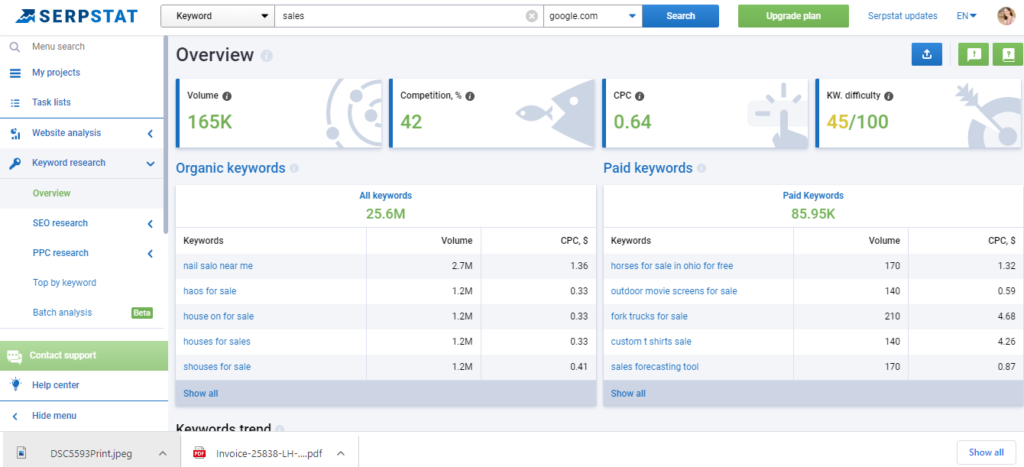
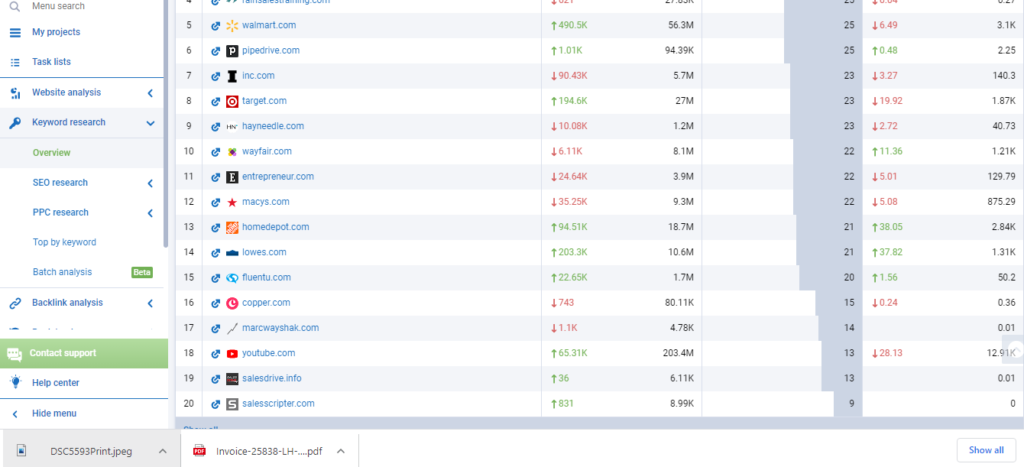
So I thought about what other keywords I could research and I remembered this person saying she helps people have better sales conversations. So I tried that keyword, and while I got some of the same results in the list of competitive websites, I also found some websites that are not her competitors, but are definitely working in the B2B space.
Google Search
Finally, you always want to use the keyword you’re researching before deciding whether to use it. Enter the keyword into Google (or your search engine of choice) and see what comes up. If the results that appear on the first page of Google are covering the same topic you’re looking to cover (or related topics), you’re on the right track.
If you found this content useful and would like to receive more of it, you can sign up for our newsletter in the space below. You can also see what we’re up to by following us on LinkedIn, Twitter, YouTube, and Facebook.
If you want to make sure you’re only targeting relevant keywords in your content, you can buy a customized editorial content calendar with 8 blog post topics completely with keywords researched and chosen specifically for your company.
