


I tend to be pretty strict about not swearing in professional settings.
One time, many years ago, I slipped and said “fuck” when talking to a coworker.
I didn’t even realize I had done it, until I got a funny look from another coworker.
When I asked what the look was for, he asked if I had really just used that word. I didn’t think I had, but the coworker I had been talking to confirmed I had. The second coworker said he was shocked to hear me say it because he thought, “Alison wouldn’t use that word! She’s a good girl.”
I hadn’t been intending to brand myself as a “good girl,” but due to my avoidance of certain words when around those people, and a general desire to be “nice” because “nice girls” are less likely to get fired, I had branded myself.
The coworker’s surprise is an indication of why branding and consistency is important. He had put me in a neat little box in his head, and as far as he was concerned, that made me predictable, which makes me safe.
When I used a word he hadn’t heard me use before, it shocked him. Suddenly I didn’t fit into that neat little box anymore. I was no longer predictable, which meant I was capable of anything.
That might sound extreme, but our lizard brains tend to operate on extremes: known and/or predictable = safe; unknown and or unpredictable = DANGER, WILL ROBINSON! DANGER!
Our lizard brains don’t recognize any in-between. They’re not capable of thinking a stranger is just a friend we haven’t met yet because people who thought like in the paleolithic era had a nasty habit of turning up dead.
The other problem with my “brand”?
It wasn’t authentic.
The real me swears.
I wouldn’t say I swear like a sailor, but it’s a normal part of my speech, although I probably swore more frequently at the time than I do now.
Being inauthentic is hard.
It’s exhausting.
Our true selves are bound to come out the second we let our guard down, and that can give the people who thought they were getting to know us whiplash.
Suddenly, they’re not sure they know us at all.
From a marketing perspective, this means your audience doesn’t know what to expect from you, and a confused audience doesn’t buy. They click away to find someone more reliable.
How do you stop that?
By making sure your brand aligns with your authentic self.
If you’re a solopreneur or a small business, this is easy: you are your brand.
If you’re a larger corporation, it can get tricky, because more people adds more ingredients to the soup, so to speak. That’s when you have to be intentional about the people you hire, the expectations you set for behavior in the workplace, as well as the values you hold and you expect your employees to hold. Not to mention the example you set for your employees, because they are paying attention to what you are and are not doing.
That’s a lot, and it involves more than just branding, but for the purposes of this article, we’re sticking with branding. Teaching people how to lead with intention is not my forte, but I know a few people for whom it is their strong suit, so let me know if you want me to make those introductions.
In the meantime, let’s get back to branding.
Table of Contents
What’s in a Brand?
How can you define your brand when multiple people are representing your brand, both online and in person?
Personality

What kind of a personality would your brand have if it were a person?
Is it a cat person or a dog person?
Is it fun and flirty or professional and proper?
Laid back or a go-getter?
You don’t need a mascot to represent your brand, but it can be helpful to think of some of the more famous mascots out there: Ronald McDonald, Mr. Clean, the Michelin Man.
Each of these mascots evokes a feeling, and that same feeling tends to be associated with the brands they’re representing, which brings me to my next tip.
Feeling
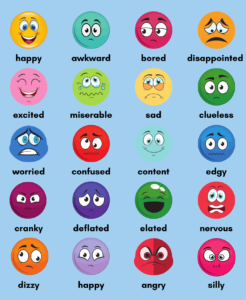
At the end of the day, branding is all about how you make people feel.
For that matter, marketing is all about how you make people feel.
That’s why we always focus on the story we’re telling in marketing, regardless of whether we’re telling that story in writing, in a video, or through visuals. Stories provide a fast track to the hearts and minds of our audience, and they accomplish that by making our audience feel something.
So, when thinking about defining your brand, think about how you want your people to feel when they encounter your brand.
Do you want them to feel
- Safe
- Excited
- Confident
- Motivated
- Reassured
- Happy
- Sleepy
- Amused
- Awwwww
Once you know how you want people to feel about your brand, reverse engineering that feeling using certain colors, fonts, and words, is easier than you might think.
Definition
One of the things I always ask new clients is, “If you could define your brand in three words, what would they be?”
It’s probably the hardest question to answer, but it’s also the most important.
Distilling everything you want your company to be and represent into just three words is not easy, but that’s how we get to the heart of your brand.
That’s how I find out what really matters to you and your brand.
So, take a moment now to define your brand in no less than 3 words. It can be more than 3, but should be no more than 5. The point is to drill down on the essential elements of your brand.
Think of it like the mental exercise of going to a deserted island and only being able to take 5 books with you.
What are the 5 books you couldn’t live without?
What are the 3-5 values your brand couldn’t live without?
Ideal Clients

As a marketer, I’m constantly saying that everything comes down to your ideal clients, and that’s especially true of your brand.
Take my example from the intro of my verbal slip when talking to a coworker. I wasn’t talking to a C-suite executive, but I was in the building of a large corporation that insisted on maintaining a professional atmosphere at all times. Hence my normal rule of avoiding four-letter words.
But avoiding those words isn’t always a bad thing, even in your marketing content.
Granted, if you’re trying to attract C-suite executives of major corporations, then you’ll probably want to avoid such language.
But I was recently talking to a client who was swearing left and right in one of our consultations, then said he didn’t want any swear words in on his website.
But, not only is swearing authentic to his personality, this is someone who’s also starting to work more and more with attorneys.
If you’ve spent any time around attorneys, you know they tend to swear like sailors.
So, when they see a website with a four-letter word on it, rather than being turned off, they’re more likely to think to themselves, “Hey, I don’t see that word on many websites. This guy is talking my language!”
This because language is one of the key ways we identify tribes.
If someone talks like us (or writes the way we talk) we’re more likely to assume they’re part of our tribe, and that’s a fast track to gaining our trust.
Values
Shared values are another great way to convince someone you’re part of their tribe.
This has become more important than ever as millennials and Gen Zers are starting to research the companies they buy from.
Not only do we want to “shop local,” but we want to make sure the companies we buy from are environmentally and socially responsible.
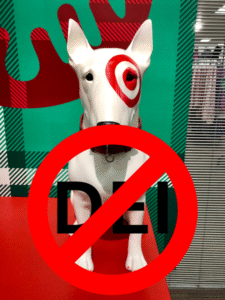
Take Target’s recent flip-flop on their DEI initiatives.
That was never a value Target truly held, but merely one they used to market the company to people who do value DEI.
As soon as Target deemed DEI expedient, it dropped it like a hot rock, and shoppers reacted by taking their business elsewhere.
It’s important to understand that values are communicated through every part of every interaction your audience has with you.
It’s in the language you use.
It’s in the way you address them. For example, do you spell their name correctly? (My name is constantly getting misspelled, so this is something I’m extra sensitive to.)
It’s in the way you introduce yourself (do you include your pronouns in your introduction?)
It’s in the topics you cover, and the ones you avoid.
It’s in the questions you answer and the ones you ignore.
So, before you define your brand, think carefully about the values you want your company to uphold. Which ones are you willing to compromise on, and which ones are non-negotiable?
The answer will inform everything you do going forward, not just from a marketing perspective, but from a business perspective.
Your Favorite Topics

As a content marketer, I always like to ask people about their content pillars, also sometimes referred to as topic clusters.
These are the 3-4 topics you love to talk about that you could go on and on about all day.
Under each topic, there are usually a lot of subtopics that are ripe for discussion — not to mention SEO juice.
So you create one, long, in-depth piece of content on your preferred topic (your content pillar), then create shorter pieces covering subtopics, all with links leading back to the pillar content.
Not only does that help with your SEO (Google loves those backlinks), it also helps you organize your library of content on your website, and help you come up with topics to cover on your blog, on social media, etc.
Need a theme for the month?
Go back to your pillar content and see what subtopics have yet to be unearthed.
Need Help?
While I’ve tried to make all this as approachable as possible, there’s no denying that there’s a lot involved in creating a brand strategy to inform all your marketing efforts going forward.
If you need help, please don’t hesitate to let me know. We can talk about it.
If you found this content useful and would like to have more like it sent straight to your inbox, you can sign up for our newsletter in the space below. You can also see what we’re up to by following us on LinkedIn and YouTube.
