


I’ve been my own boss and worked from home for close to a decade now. When I started out, I frequently had people asking me how I stay motivated to work when there are so many distractions around me: the television, social media, my dog, etc.
I’ll admit, there are some days when it’s hard to get motivated. But I know I can’t continue to have those nice distractions (a TV, a home to watch it in, internet to access social media, or food for my dog) if I don’t continue to get clients and do the work they pay me to do.
I’m avoiding the “punishment” of homelessness and a starving dog.
I’ve also become really good at withholding rewards from myself until after I’ve checked off everything on my to-do list.
I once read something by Oprah where she said, everything she does throughout the day is so she can curl up with a good book at the end of the day. I was like, “OMG, I have something in common with Oprah!”
I am surrounded by books in my little one-bedroom apartment, and I live right across the street from my local library, so there is no shortage of temptation for my to close my laptop and spend a whole day reading.
But, again, I need to avoid the punishment of homelessness and an empty pantry. So I force myself to work first and read later. By promising myself a chance to relax and do what I most want to do only after my work is done, I motivate myself to get to work as a way of seeking reward in the short term, while also avoiding punishment in the long term.
It might sound overly simplistic, but when you get right down to it, our brains are essentially designed to do two things: avoid punishment and seek reward. Everything we do is aimed at some version of one or both of those goals.
So think about what people are looking for when they come to your website. Are they looking for a reward? Or trying to avoid punishment? Or both?
Table of Contents
- How to Demonstrate Rewards and Punishments on Your Website
- How Do Punishments and Rewards Work on Websites?
How to Demonstrate Rewards and Punishments on Your Website
Of course you can’t punish people for avoiding your website. Nor can you give them a reward for visiting or staying on your website. But you can incentivize them to work with you by tapping into their desire to avoid punishment and seek out rewards.
Pain Points

In the world of marketing, we talk a lot about pain points. The idea is that you need to identify the problem you solve for your clients, then put that problem front and center in everything your brand does so you can attract, engage, and convert the people who are feeling that pain (or are afraid of feeling that pain.)
Then you position yourself as the one who can alleviate that pain for them — or help them avoid it in the first place.
Opportunity Points

Something that’s just as powerful, but not mentioned as often, is the power of opportunity points.
This is where you tap into your audience’s desire to seek reward, rather than avoid punishment.
Instead of talking about how much pain they’re in (or might be in soon if they don’t hire you,) you talk about how wonderful their life will be after they’ve hired you.
How can you make their lives better?
What opportunities for improving their situation are they missing out on by not working with you?
Rather than convincing people to run away from something, you’re enticing them to run toward the beautiful future you have to offer.
Avoiding Punishment Is Seeking Reward
One study found that avoiding punishment can be it’s own reward.
We all know the feeling of having averted disaster, and thinking about it can get your heart racing, just as much as the anticipation of an exciting reward can get your blood pumping.
So don’t think you have to trade the stick for the carrot. Sometimes taking the stick away is enough of a reward all on its own.
How Do Punishments and Rewards Work on Websites?
If you’re thinking, “This sounds great, but how does it apply to my website?” read on.
Demonstrating Rewards on Your Website
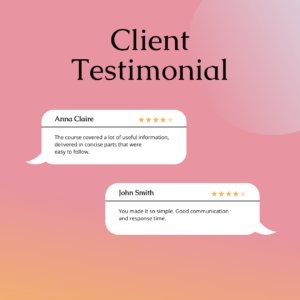
My favorite way to demonstrate opportunity points in your content is to have your clients provide it for you.
Every time you generate a positive outcome for your client, ask them for a testimonial. Put that testimonial everywhere: your Google My Business Profile, your website, social media, everywhere you can.
This does two things: first, it provides social proof, which I’ll talk about in another post. Essentially, it’s the idea that everyone takes what you say about yourself with a grain of salt. But provide evidence that someone else in their situation had a positive experience with your company, and that will go a much longer way towards convincing them to work with you.
When writing their testimonial for you, some of your clients might start out with their pain point, but the focus of the testimonial is almost always on the awesome outcome you created for them. The idea behind that content is to tell your prospects that, if they work with you, this is what their life could look like. They’ll tell your future clients for you all about the reward they are seeking.
Demonstrating Punishment on Your Website
While I love a good opportunity point, my go-to is still to focus on the pain point. At least at first.
I like to paint a picture of the dilemma in which my ideal clients find themselves.
Then I twist the knife. How much worse can this situation get if they don’t take action to address it?
Then I provide the solution I can offer them.
But offering a solution is not enough on its own. Remember, we are emotional creatures, so it’s not enough to see a list of the things you can do to improve their situation, or even a list of things they can do themselves to improve their situation.
A more powerful way to present that possibility is to paint a picture of what their life will be like after the problem is solved. How will it feel to have that weight off their shoulders? Or to be able to pursue their highest standard of living?
Demonstrating Both Punishment and Rewards on Your Website
You’ll notice that might favorite storytelling technique involves both punishment and reward. I start by introducing the pain point (the punishment they are trying to avoid), provide a solution, then I introduce the opportunity point (the reward they are seeking.)
As with almost every aspect of marketing, there’s no reason to limit yourself to just one. Many of them are most effective when mixed and matched with each other.
If you found this content useful and would like to have more like it sent straight to your inbox, you can sign up for our newsletter in the space below. You can also see what we’re up to by following us on LinkedIn, YouTube, and Facebook.
