


Recently I was talking to someone about the importance of design in marketing.
I’m not a designer, which is why I like to find designers I can partner with, because together we can provide the full range of services to our clients.
This designer said they had been talking to another marketer in the hopes that they could work together. But the other marketer says they never work with designers because their focus is on SEO, and design’s impact on SEO is pretty minimal.
This is my problem with a lot of SEO professionals, as well as a lot of business owners when they think about what SEO is and what it can do for your business.
They think in terms of getting traffic to your website. The end.
But that’s not the end, especially if you’re providing professional services, such as legal or financial services.
When it comes to online lead generation, getting people to your website is just the first step. From there it becomes all about what they find on your website. Does it look professional? Is it clear what you do and the kinds of clients you help? What problem do you solve? Why should they work with you over someone else?
If they found your website via social media, they’re also going to see if your website matches your social media profile in terms of things like colors, voice, and the topics you cover.
This got me thinking about the similarities and differences between lead generation and lead nurturing. Every business needs both. Those with a shorter funnel need to focus more on lead generation, and might be able to get away with exerting minimal effort on their lead nurturing. Those of us with a longer buyer journey need to focus more energy on lead nurturing without forgetting to invest in lead generation.
The work I do for my clients involves both lead generation and lead nurturing. A big reason I ended up doing both is because I like to make sure the work I do for my clients is as effective as it can be. It doesn’t matter how good your lead generation strategy is if you don’t have an effective lead nurturing strategy, and vice versa.
With that in mind, let’s talk about the differences between lead generation and lead nurturing.
Table of Contents
Lead Generation

Honestly, the term “lead generation” makes me think of creating people out of thin air who could one day buy my services. Of course, that’s not what lead generation refers to, but how cool would it be if we could wave a magic wand and build people who will one day become ready-made clients for our business?
In fact, a better image for lead generation is a magnet drawing people to your website.
People need to be aware of who you are and what you do, but that alone is not enough to convince them to work with you. They want to know your values and what sets you apart from the competition.
If you’re branding and messaging are aligned with each other, and they’re both aligned with your target audience, they’ll be drawn to you like paper clips to a magnet.
So let’s start with how to make people aware you exist.
Search Engine Optimization (SEO)
My favorite thing about SEO is the fact that, when done right, it allows people to find you when they’re already looking for you.
Think about cold calling a prospect who fits the definition of your ideal client, but they’ve never heard of you and they have no interest in buying your services.
Of course there are times when you cold call a prospect and that person/company eventually becomes a client, but you have to talk to a lot of answering machines and people who are uninterested before you find those nuggets of gold.
By contrast, imagine picking up the phone and calling someone who found their way to your website and read a few blog posts. Maybe they even subscribed to your newsletter before clicking away.
That is a much warmer lead, and a much easier conversation to have.
So, if you have not already done so, optimizing your website to make Google your friend is the first thing you need to do, not just to generate more leads, but to make sure those leads are high quality, and therefore easier to convert into clients.
There are a lot of moving parts involved in SEO, and I’ve covered a lot of them in other articles on this blog, but you can use this list as a quick refresher:
- Keyword research
- Navigation menu
- Setting up a sitemap and submitting it to Google Search Console
- Creating and maintaining a Google My Business Profile
- Dividing your topics into three or four categories, creating a pillar page for each category, then creating content that supports and can link to that pillar page
- Creating content that answers the questions your target audience is asking about your services
- Making sure the website loads quickly and is easy for users to use and navigate to the content they want
- Running a backlink campaign
Advertising
As much as I love SEO, there’s no denying that it’s a long game. If you need to generate leads now, and you have the money to spend on ads, that’s a great way to start generating leads right away.
Just make sure you’re very strategic about the keywords you’re targeting and the pages your ads are directing people to visit.
For example, if you target informational keywords, it won’t make sense to direct them to a sales page. Instead, they’ll be looking for a blog post, a video, a webinar, or even a book on the subject.
While there’s nothing wrong with targeting informational keywords in your ad, just be aware you’ll be generating leads who are still in the early stages of the buyer journey and are not yet ready to buy.
The good news is you’ll be in a prime position to convert those leads if you do a good job of nurturing them and leading them through the buyer journey.
The bad news is you’ll be spending money on leads that won’t convert for a while, so make sure you have the funds to sustain a long campaign if you end up going that route.
Social Media Outreach
Social media and SEO are both more powerful when used together, but if all you’re doing on social media is posting once in a while, you aren’t getting the most out of it.
When used to the fullest, social media is a great resource for both lead generation and lead nurturing. I’ll talk about using social media for lead nurturing later in this article, but for now, let’s talk about how you can use social media to generate leads.
Research Your Target Audience

One of my favorite things about social media is that it is a goldmine of information on your ideal clients — and it’s completely free!
If you already have some clients who are active on social media, start by checking out there accounts. Which social media channels do they use? Which ones do they use the most? What do they post about? What accounts do they follow?
You can also snoop on your competition. See who’s following them, then take a look at the profiles of those followers and see what other accounts they’re following. This will give you a good indication of their interests and the types of content they like to consume.
Reach Out to Leads and Influencers
In addition to reaching out directly to leads on social media, you can also reach out to influencers in your industry and in related industries to see if they’d be interested in collaborating with you. If they say yes, you can gain access to the audience they’ve already built. Why reinvent the wheel when you can just hop on someone else’s wagon?
Public Speaking/Webinars

Public speaking is one of my favorite ways of both generating and nurturing leads. Few things are more effective than getting up in front of a crowd and explaining something to them that can improve their lives in some way.
As with anything, there are things you should be sure to do and things you should be sure to avoid if you want your public speaking efforts to be effective.
As with any marketing content you create for your business, your presentations need to focus on a topic of interest to your target audience. If it won’t help them solve a problem, it won’t provide value and they won’t attend.
Providing value is also key. While a benefit to public speaking is to generate leads for your business, the main purpose of your presentation needs to be educating your audience so they can improve some aspect of their lives. If you succeed in doing that and you have a compelling, relevant call to action, the leads will come to you.
Basic presentation skills are also helpful. Avoid the ums and uhs as much as you can. Make eye contact as much as possible without staring them down, and use language they can understand and relate to. Don’t talk over their heads, but don’t talk down to them either. Make the content accessible and easy for them to digest.
Making it easy for you to remember is also a good idea. Needing notes or index cards is one thing, but don’t read a script when you’re giving your presentation because no one wants to see that.
Instead, break your presentation up into segments. That way, all you have to remember is which segments you want to cover, and because you know every aspect of your industry, you’ll be able to take it from there.
Breaking your presentation up into segments will also have the added benefit of making it more digestible for your audience. Win/win!
Publish Case Studies and Tag Your Clients
I love case studies because they are one of the best ways to talk about the results you get for your clients.
Yes, your clients need the services you provide, but at the end of the day, they hire you to get results for them or their businesses.
A case study is a great way to prove you are capable of driving those results because you already did it, and that can go a long way towards converting a prospect who’s on the fence to schedule that call with you to discuss how you can help them get those results.
Tagging your client in the case study you publish about them accomplishes several goals. First, it makes your client feel good because you’re getting their brand in front of more people.
Second, it’s more likely to get your brand in front of more people because people love sharing content that mentions them, especially when it talks about them favorably. That can get you in front of your client’s audience in a way that’s talking you up. It’s the social media equivalent of someone at a party introducing you to one of their friends and saying, “This is Terry and they really helped me with XYZ.”
Third, the algorithm likes it when you tag other people in your content because it shows you’re playing nice with others and not just talking about yourself. That alone will improve the visibility of your case study.
Guest Blogging
Blogging on your own website can be a great way to generate leads as part of an SEO strategy, but for the most part, it’s considered part of your lead nurturing campaign. People are already on your website, so they’re probably already familiar with who you are and what you do, they’re just looking for information to confirm you really know your stuff.
Guest blogging, on the other hand, is akin to speaking at an event where most of the people don’t know you, but they’re familiar with the host of the event and they trust that person to get good speakers.
Someone visiting an influencer’s website is probably already aware that person is an influencer and knows what they’re talking about when it comes to certain industries. As a result, they’ll be more likely to trust any guest bloggers that influencer chooses to host on their website because those guest bloggers needed to have convinced the influencer they are an expert in their area in order to earn that guest blog.
As a result, not only does guest blogging get you in front of a whole new crowd, it gets you in front of a crowd that is predisposed to like and trust you because the website host has vouched for you. Now all they need is to get to know you.
Lead Magnets and Gated Content
Lead magnets are a great way to get people to sign up for your website who might not otherwise subscribe. By providing something of value, you position yourself as a thought leader in your industry and give them something that helps them solve a problem in their lives.
Lead magnets can be considered a tactic for both lead generation and lead nurturing. It can be used to prompt visitors who are already on your site to sign up for your newsletter, but you can also promote your lead magnet on social media and in ads to get it in front of people who have no idea who you are. If they’re interested in the lead magnet, they’ll hand over their email address in exchange, and now they’re a subscriber!
Books

I wrote a whole blog post about the benefits of writing an ebook for your business. If you create a short ebook you want to provide as a free lead magnet, that’s one way to leverage that content.
If you write a longer book, you can sell it on other websites, like Amazon. Keep in mind that Amazon is it’s own search engine, and while it’s not large enough to rival Google, it’s certainly nothing to sneeze at, especially considering the number of people who go straight to Amazon when looking for a book on a subject.
Books are also a great way to get more speaking gigs. I have been a guest on podcast and a speaker on stages that won’t accept anyone who is not an author, so if you want more speaking gigs and you have yet to write that book, start now.
Leverage Reviews

Ask for reviews whenever and wherever you can.
If you’re active on LinkedIn, ask your clients to leave you a review or a recommendation on LinkedIn.
If you have a Google My Business profile, ask clients to leave you a review there.
Reviews are one of the first things people look at when investigating a new business, so don’t put this off.
And don’t let reviews just sit there. As with your case studies, reviews are a great opportunity for you to create your own content around the review and tag the person who left the review so they can share the content with their audience.
Ask for Referrals
One of my favorite sales conversations wasn’t a sales conversation at all. A client referred someone to me, and by the time we sat down together, he said she had spoken so highly of me that he was already sold. I didn’t have to do anything.
As magical as it can feel when those referrals come out of nowhere, don’t sit twiddling your thumbs until one happens to come your way.
Have a system for asking clients and power partners for referrals.
Make it clear who your ideal clients and power partners are so people know which introductions to make for you.
Make it easy for them by writing an introduction for yourself and sending it to people in your network. That way they can just copy and paste it into their email or social media introductions for you. They’re more likely to follow through when it’s easy, and it ensures you’re getting introduced the way you want to be introduced.
It can also help to have a standard message you send to people asking for a referral. You’ll be more likely to send that message if it’s already sitting on your hard drive, and all you have to do is copy and paste it into your email or LinkedIn messages. Just be sure to personalize each one so it builds that relationship, because it’s the relationship that will get you the referrals, not the message itself.
Free Tools
Last, but certainly not least, free tools are a great way to generate new leads because, if they provide value, people will share them with the people in their life who can use them. With the right marketing campaign, that could mean a lot of high-quality traffic to your website.
An example of such a valuable free tool could be a calculator that helps people calculate the value of something related to the services you provide. It could be a free blog post idea generator or image generator.
Get creative with all the ways you help your clients. What’s one small, simple way you help them that can be automated?
Lead Nurturing
The amount of time you have to spend generating leads vs nurturing leads depends on a few things, including your industry.
Think about most of the ads you see on social media. The algorithms show you the ads they think you’re most likely to be interested in, then most of the ads try to get you to go almost straight from the ad to their sales page where they’ll try to lead you through the process of buying their stuff.
This works great for low-cost items, especially if they’re a necessity, or sufficiently inexpensive that buyers don’t feel they’re losing much if the product doesn’t work out the way they expect.
The more expensive your product/service, the longer the buyer journey is likely to be, which means you’ll have to spend more time nurturing those leads and convincing them you’re the real deal.
If you provide professional services, such as legal or financial services, that will also lengthen the amount of time people will spend researching you and your company before reaching out for a phone call or a meeting. That’s because they’ll want to make sure you’re really an expert in your industry before they commit to working with you.
The content you create should convince people, not only that you know what you’re talking about, but that you’re a thought leader in your industry.
It should also educate your audience on the value you provide and what sets you apart from others in your industry.
Blogging
I always recommend people maintain a blog for SEO purposes, which makes it great for lead generation, especially when it comes to generating leads in the early stages of the buyer journey.
If they’re just dipping their toes into a topic or industry and they find your website, that’s your chance to grab their interest and turn them into subscribers so you can convert them into warm leads, and eventually clients.
As much as I love blogging, you can get many of the same benefits you get from blogging by podcasting and/or creating videos.
We are visual creatures, so we love watching videos. If you star in the video (which you should) it’s a great way to prove to people there are real, live people behind the website, which will also make them more likely to reach out to learn more about your services.
Podcasting is also a great way to keep getting in front of people who might not be ready to hire you now, but could be great clients later on down the road. The key is to stay top of mind until they are ready to buy, and podcasting is a great way to do that while educating them and demonstrating the value you provide.
The only advantage blogging has over podcasting and videos is that Google still has trouble “reading” audio and visual content. It’s much better with text, but you can get around that by transcribing your videos and podcast episodes and putting the transcriptions up as blog posts.
Putting your videos on YouTube can also help your SEO because Google owns YouTube. Just be sure to use relevant keywords in the title and description of your videos to make it easy for Google to figure out which searches to pair with that content.
Email Marketing

The inbox is one of the few places left where you have to be invited in, so don’t miss out on any opportunities to ask for that invitation.
When people do invite you into their inbox, don’t abuse that invitation, but don’t ignore it either.
Emailing your subscribers once a week is not spammy. They asked to get updates from you, so send them updates.
Emailing your subscribers multiple times a day is definitely spammy. Even once a day is pushing it, unless they specifically signed up for some sort of daily update.
Once people have signed up for your newsletter, use that opportunity to tell them what’s new. Send them your latest blog post, podcast episode, and video. Tell them if you’re launching a new service or recently welcomed a new team member.
And last, but certainly not least, don’t forget the call to action (CTA). It should be a small part at the end of your newsletter, but it should be relevant, compelling, and consistent. Most people won’t take you up on your CTA in every newsletter you send, but that’s not important. The important part is reminding people you exist and how you can help them so you’re the first one they think of when they are ready to hire. Then all you have to do is make it easy for them to reach out.
Social Media Posting

There are ways you can encourage the algorithms to show your social media posts to new viewers, and you should absolutely take advantage of those strategies, but most of your social media posting will be keeping in touch with prospects.
As with all your marketing content, most of your social media posting should:
- Provide value
- Position you as a thought leader in your industry
- Educate your followers on your industry and the value you provide
Yes, you can (and should) promote your services on your social media posts, but those posts should be kept to a minimum. A good rule of thumb here is the 80/20 rule: 80% of your content should provide value and education while 20% should be promotional.
Keep Using Your Content After Publication
Too many people make the mistake of publishing a blog post or a video and then sitting back and waiting for the leads to come rolling in.
It doesn’t work like that.
Your content is like any other asset in your business in that you can either make the most of it, or you can let it sit on your website and gather cyberdust.
In addition to promoting your content on social media and through your newsletter, don’t be shy about coming back to those older pieces of content and using them throughout the sales process as long as the content is still relevant.
One of my favorite ways to actively get the most out of my content is to send it to prospects in the course of the sales conversation. If a prospect has a question about something I’ve covered in a blog post, when I send an email to follow up with that prospect, I can say something like, “Hey, I know you had questions about Google’s EEAT standards when we talked. I wrote a whole article on that a while back, which you can see here.”
That allows me to follow up in a way that feels organic, provides value, and positions me as an expert in my industry, all of which makes it more likely I’ll hear back from that prospect.
Align Your Sales and Marketing Strategies
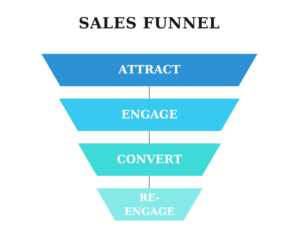
One of the most common mistakes I see business owners making is creating content for the sake of creating content.
Yes, you need to create content to help you grow your business. But you can only be successful in achieving that goal if you know how your content is going to improve your company’s bottom line.
That means you need specific goals for each piece of content, and you need metrics you can use to determine whether you reached your goal, or if something needs to be adjusted.
As I mentioned in the previous section, don’t be afraid to use your content in the sales process. In order to do so effectively, you need to make sure your content provides value and answers the questions your target audience is asking.
That means your sales department needs to be talking to your marketing department about the questions they’re hearing most often from their prospects and clients. That tells the marketing department the topics they should focus on covering in their marketing content.
Retargeting
Last, but certainly not least, follow up with past clients. Keep them on your newsletter and continue sending them information relevant to the services you provided for them in the past, or questions they’ve been asking recently.
You should also stay in touch with them on social media and be sure to see what they’re posting and engage with those posts.
If it’s a client you recently finished working with, ask for a review or a referral so you can generate more leads and keep the cycle moving.
Get Help with Your Strategy
Making sure your content is as effective as possible, and that you’re making the most of it, requires a comprehensive content marketing strategy. If you want to make sure there are no gaps in your content marketing strategy, tell us your concerns, and we’ll take it from there.
If you found this content useful and would like to have more like it sent straight to your inbox, you can sign up for our newsletter in the space below to make sure you never miss an update. You can also see what we’re up to by following us on LinkedIn, YouTube, Instagram, and Facebook.
