


A newsletter can be a great way to get people to engage with your brand after they found you on social media, read one of your blog posts, or saw you speak at an event. You worked so hard to get in front of those people, create a compelling email and send it out on schedule … only to hear crickets.
No one opens your newsletter or clicks through to your website. What are you doing wrong?
If someone liked your content enough to sign up for your newsletter in the first place, that’s a good sign, right? Why would they sign up to get something they never open?
The problem is not necessarily that they didn’t like your content or that they don’t want more of it, it’s just that they’re simply too overloaded with content to get to everything. According to a study conducted by the Radicati Group, the average office worker receives an average of 90 emails per day.
That’s a lot of content to compete with, and that’s not even including the number of messages that email servers like Gmail automatically send to the spam folder so the recipient never sees them. So the question becomes: how can you create so much demand for your content that opening it becomes a priority for your audience? We’re going to give you some tips on how to make sure your newsletter is irresistible so you can increase your open rate.
Table of Contents
- Make Sure You Aren’t Getting Sent to Their Spam Folder
- Optimize for Mobile
- Know Your Audience
- Write About a Topic That Speaks to Their Pain Points
- Write a Compelling Newsletter Subject Line
- Provide Value
- Segment Your Newsletter Subscriber List
- Do Some A/B Testing
- Send Follow-Up Emails and Purge Non-Responders
- Conclusion
1) Make Sure You Aren’t Getting Sent to Their Spam Folder

My first tip is more technical than strategic. When someone signs up for your newsletter, just let them know they’ll be getting a confirmation email asking them to confirm that they really do want to receive your newsletter, and remind them to check their spam folder if they don’t see it in their inbox after a few minutes. If you use MailChimp, it does this for you automatically, but it doesn’t hurt to check your settings to make sure your audience is getting these reminders.
2) Optimize for Mobile
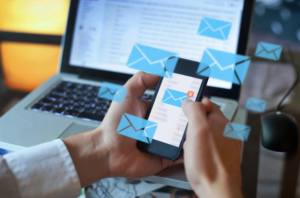
Don’t forget that people are increasingly relying on their phones and tablets for everything from finding out about the best local coffee shops to checking their email. If your newsletter doesn’t display well on a mobile device – for example, if parts of it get cut off – your subscribers are more likely to delete your newsletter than to wait until they can get to a computer or laptop.
If you notice your newsletter isn’t getting opened on mobile devices, or it’s getting opened, but no one is clicking through to your website, it’s time to make sure your newsletter is mobile friendly.
That goes for your website as well. Google required all websites to be mobile friendly years ago, but if you haven’t checked to make sure yours is compliant, now is the time to do so. If people click through to your website from their email app, but don’t engage with any content on your site and/or they leave quickly, it might be because your website doesn’t show up on mobile devices the way it should.
3) Know Your Audience

Your marketing won’t be effective if it’s not resonating with your audience, and it won’t resonate with your audience if you don’t take the time to get to know them first. What are their pain points? What stresses them out? Keeps them up at night? What problem is your product/service solving for them, and what will their lives look like afterwards?
Once you have a clear idea of who your target audience is and the problems you solve for them, make sure every piece of content you create is designed for that audience, addresses their pain points, and paints a picture of what their lives will look like after you solve that problem for them. This leads nicely into my next tip…
4) Write About a Topic That Speaks to Their Pain Points

Once you’ve made yourself familiar with your target audience and their pain points, it’s time to do your keyword research. Know which search terms are getting the most traffic and have been least covered on other websites so you can identify those content gaps. Once you know the questions your target audience is asking and not getting answers to, you can fill that content gap, which gives you a better chance of getting their attention.
Keep an eye on the kinds of topics your competition is covering. If another website in the same industry is getting more traffic than yours, there’s probably a reason. It could be something small and technical, such as your website’s load speed (so definitely stay on top of those), or it could be that the topics they’re covering are of greater interest to their/your target audience. You might not have access to their newsletter data, but you can take a look at their website traffic using your favorite SEO tool (mine is Serpstat) to get an idea of how their stats compare to yours.
5) Write a Compelling Newsletter Subject Line
The subject line of your newsletter determines whether it gets opened, so you’d better make sure it’s a good one. It has to be short enough to fit on the screen when they look at their inbox (and remember that most people are checking their email on their phone, which gives you less space to work with), but long enough to make it clear what the newsletter is about.
Include keywords in the subject line of your newsletter, not because it’ll show up in searches, but because recipients will recognize those keywords as having to do with their problems. Promise a solution to their problems, and they’ll be that much more likely to click.
Emojis also make subject lines more eye catching and compelling, but use them sparingly. The same goes for exclamation marks and capitalized letters – you can use them to draw the recipient’s attention, but don’t overdo it. A reader with sensory overload is not going to be receptive to your message.
6) Provide Value
Like your blog posts, your newsletter is not a place to sell. Occasionally, you can use it to let your subscribers know about a sale, a special promotion you’re running, or a new product or service, but the vast majority of your emails should provide value if you don’t want them to unsubscribe.
That means giving them tips they can use in their day-to-day lives to solve their problems themselves – or at least start to work towards a solution. Once they that see your tips work, they’ll see your value, making them more willing to buy from you.
You can also point your subscribers toward other influencers in your industry or (preferably) adjacent industries in the form of a roundup email that let’s them know what kinds of topics are generating discussions in your industry. You don’t want to point them to your competitors, but you do want to make it clear that you know where the reliable information is, because that will position you as an authority in your industry.
7) Segment Your Newsletter Subscriber List
Rather than sending all your newsletters to all your subscribers, you’ll get much more engagement if you break up your list into different groups based on their interests. According to MailChimp, segmented lists get 14.31% more opens than non-segmented lists and more than double the clicks compared to non-segmented lists. This is because, rather than trying to create emails that appeal to your entire audience, you have a better chance of getting your audience’s attention by only sending them content that’s relevant to their interests.
For example, if someone subscribes to your newsletter after reading a blog post about retirement planning, you’ll want to put them in the retirement planning segment of your newsletter subscriber list so you can send them more information on the differences between a 401(k) and an IRA, or the benefits of an HSA. Other viewers browsing your website and downloading your tips on saving for college should be put in the college savings segment of your newsletter subscriber list.
You can determine which segment of your list subscribers get assigned based on the kind of content they’re consuming at the time they subscribe to your newsletter, the emails they open, and the links they click on from your emails. Ideally, you should be considering all three of these factors when deciding in which segment to place each newsletter subscriber.
8) Do Some A/B Testing
Once you have your subscribers divided up by interest, you can break those groups up into sub-groups and do some A/B testing to see which tactics get the best results.
Determine the best time to send your newsletter. I wrote a whole blog post on this topic, but it comes down to knowing when your audience is checking their email, and when they’re most likely to open your newsletter. There are some standard recommendations, which I covered in the aforementioned blog post, but it’s always worthwhile to test your own audience to see what works best for them. You might get some results that defy the industry standards.
You can also do some A/B testing when it comes to your subject line so you can determine which kinds of subject lines your subscribers are more likely to click on.
Additionally, you should measure your click-through rate (CTR) when it comes to everything from when you send the newsletter, to the subject line, to the topic of your newsletter. Test everything and test it again to see which tactics are most likely to prompt your subscribers to open your newsletter and click through to your website.
With all of the testing you’re doing, keep in mind that you’ll probably get different results for different segments of your subscriber list. That might mean you have to send out multiple newsletters at different times, with different kinds of headlines, but that’s the point of segmenting your subscriber list to begin with: to make sure that the people who want your content get what they want when they want it.
9) Send Follow-Up Emails and Purge Non-Responders
It might sound counterintuitive to delete subscribers from your newsletter. After all, aren’t we trying to increase our number of subscribers?
But if someone has been receiving your newsletter for a while and they’ve never opened a single email, that’s a sign that your message isn’t reaching them. Either it doesn’t speak to their interests or pain points, so they never open your newsletter, or maybe they no longer use that email address and you’re just filling up an inbox that never gets checked anymore.
Either way, it doesn’t hurt to reach out to them and make sure they still want to receive your newsletter. Just send them a quick email saying you’ve noticed they haven’t opened your newsletter in a while and give them a chance to either unsubscribe or confirm that they still want to receive your emails. If they don’t respond after a few days (maybe a week), go ahead and remove them from your subscriber list. There’s no point in continuing to send emails to someone who either isn’t seeing them or doesn’t want them.
10) Conclusion
While there are some standard recommendations for making sure your subscribers open your newsletter and click through to your website, it’s important to remember that each audience is a little different and what works for one industry won’t necessarily work for another. So research your audience, test your results, rinse and repeat. It’s a process that never ends, but then, so is running a business.
If you found this content useful and would like to receive more of it, you can sign up for our newsletter by entering your email below to make sure you never miss an update. You can also follow us on LinkedIn, Twitter, YouTube, and Facebook if you’d like to receive updates there.
If you’re ready to ditch the DIY and have a professional handle your newsletter for you, we can help with that.
