


Let’s say a friend of yours just finished bingeing the latest Netflix sensation and they ask you what they should watch next. You know this friend of yours loves true crime, so you recommend a new docuseries exploring whether a missing woman’s lover was involved in her disappearance.
If your friend preferred rom coms, your recommendation would probably be different.
Google aims to operate in much the same way. While keywords are certainly important in determining which links appear where in the search results, Google also takes into account what it knows about each user so it can put in front of them the links they’re most likely to click on and to find value in the content. This is also part of why Google invests so much in gathering data on us. In theory it’s for our own good.
But what does this mean for you as the marketer? If you’re trying to get your content to show up on the first page of Google for certain search terms, what do you do if it only shows up for some people but not others, even when they’re using the exact same keyword?
First, you need to understand the information that gets taken into account for Google’s personalized search results, so let’s start there.
Table of Contents
- Google’s Personalized Search Prioritizes Location
- Google’s Personalized Search Accounts for Individual Search and Browsing History
- Google’s Personalized Search Shows Different Results on Different Devices
- Google Uses Its Other Products When Personalizing Search Results
Google’s Personalized Search Prioritizes Location
It should come as no surprise that Google keeps track of where its users are located and uses that information to personalize their search results. If you don’t have mobile tracking on your phone turned on, Google will use your IP address to figure out where you are. It’s not as accurate, but it’s still pretty good.
From a marketing perspective, this is why I always recommend setting up a Google My Business page because you have to provide a physical address in order to set up that page, and Google will use that information to determine in which searches your business appears.
If you have a brick-and-mortar location, you’ll want to make your address visible to the public so people looking for you can find you. Even if you work out of your home and you decide to keep your address private, you might be surprised how often your location is a factor in determining which searches your business appears in, even if the user can’t see your address.
Google’s Personalized Search Accounts for Individual Search and Browsing History
Google keeps a personalized profile of each one of its users that includes, not only the search terms that person has used, but also which links they’ve clicked and spent the most time on.
A good example is “kafka.” Someone who spends a lot of time researching streaming applications will probably get information about the Apache Kafka software when they search “kafka,” whereas someone who spends more time researching German-language novelists will be more likely to see results about Franz Kafka. Same search term. Vastly different results.
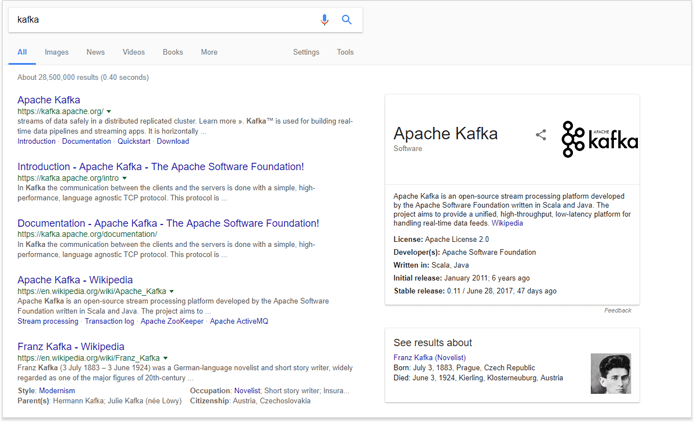
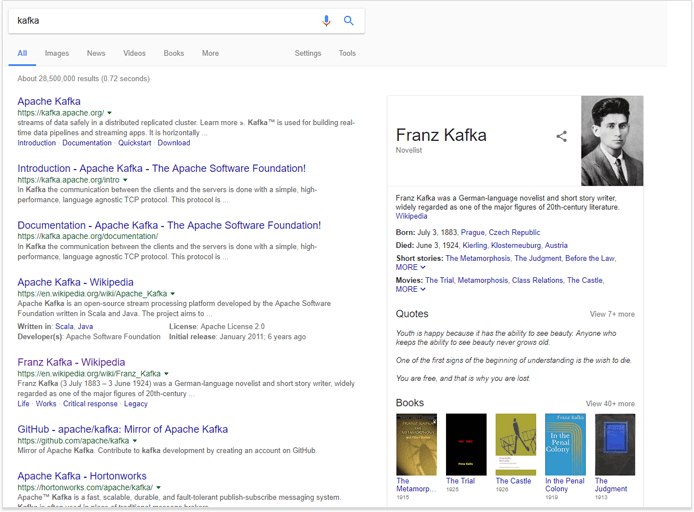
This is why you can’t just Google your business or the keywords you’re targeting to see where you show up in the SERPs (search engine result positions). Google knows exactly what you’re looking for, so it’s going to show you your business, even if it won’t necessarily show your business to other people using the exact same keywords. This is why you need to use a rank tracking tool to tell you how your website is performing for certain searches. Most SEO tools include a rank tracker, so if you have not done so already, check whichever SEO tool you use to see if it has a rank tracker. If you are not currently using an SEO tool, I recommend Serpstat because it’s the one I use.
If you don’t want to pay for an SEO tool, you can use the Private/Incognito mode on your browser to get de-personalized results.
If this sounds like the deck is stacked against you, keep in mind that Google’s personalized search can actually work in your favor. By targeting keywords with very little competition (and working on the overall quality and searchability of your website) you can increase the likelihood your website will show up at the top of Google’s first page. That will increase the likelihood people will click through to your website, and the more time they spend on your website, the more Google will show them your website in future searches because they’ll have already shown some interest.
Google’s Personalized Search Shows Different Results on Different Devices
Even the same person logged into their Google account on both their desktop and smartphone will get different results when using the same search term on different devices. The results that rank on the first page of Google on mobile devices are so different from the results that rank on the first page of desktop devices that Google’s mobile algorithm can almost be considered a separate algorithm from Google’s desktop algorithm.
This is why it’s so important to track your SERPs on both desktop and mobile. If you’re doing great on desktop, but you’re buried under the competition on mobile, you need to adjust your mobile strategy.
Also keep in mind that people are more likely to use voice search on their phones than on their desktop or laptop, so if you know your target audience tends to spend more time on their mobile devices than on their laptop or desktop, you’ll want to make sure your website is optimized for mobile and your content is optimized for voice search.
Google Uses Its Other Products When Personalizing Search Results
I was recently talking to a friend about how Google knows everything I’m doing. Not only are my calendar and to-do list on Google, but so is my email and a number of my documents (although I don’t use Google Drive as much as some people I know). My primary browser is Chrome, and anytime I want to know how to get somewhere, I use Google Maps.
Google can use information from all these sources any time you want to know what your plans are for the weekend or if your flight is on time. Just ask Google and it will tell you.
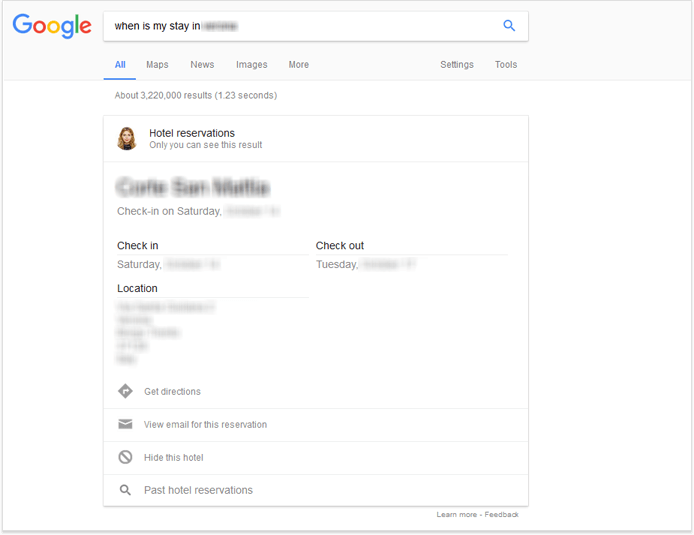
Of course, because that’s so specific, it doesn’t really have anything to do with your SEO strategy, but it is interesting to consider how much Google knows about every move we make, depending on how many of its products you use.
If you found this content useful and would like to receive more of it, you can sign up for our newsletter in the space below. You can also see what we’re up to by following us on LinkedIn, Twitter, YouTube, Instagram, and Facebook.
Need help with your SEO strategy? You can find out more about our SEO services and how they can help you get in front of your prospects when they’re looking for you.
