


I was talking with someone who said her clients and referral partners tell her, “I’ll call you when I need you.”
Currently, her strategy for staying in touch is just to keep calling them to ask if they’re ready yet.
No one likes making those calls, and even fewer people like getting those calls.
A better way to stay in touch is to get them to subscribe to your newsletter, then pack that newsletter with tips, tricks, updates, and news they can use.
Not only does that keep you top of mind, it positions you as the expert in your field. The person to go to any time they have a question … or a referral.
I’ve talked about what to put in your newsletter, when to send your newsletter, and even how to get more people to open your newsletter.
But none of will do you any good if you don’t have any subscribers, so let’s talk about how you can get more people to subscribe to your newsletter.
Table of Contents
Ask

First and foremost, I need to stress the importance of building your email list only by people actively signing up for your newsletter.
Never add someone to your newsletter without their express permission.
There might be the occasional person you run into at a networking event who asks to be added to your newsletter, in which case you can manually add their email address to your list. But adding every email address you encounter to your email list is a great way to piss off prospects and get blacklisted by your email marketing platform.
Value Proposition

As you network, you’ll probably run into people who are happy to subscribe to your newsletter just because they like you and want to stay in touch.
Some might even subscribe to your newsletter just because you asked them to add you to their email list, and so they want to return the favor.
But most people will want to know what’s in it for them.
The average person gets more than 100 emails a day, and let’s be honest, most of them go straight into the trash without ever getting opened.
Why should they add another email to that list?
To answer that question, you’ll need to understand the value of the content that will be in your newsletter. What will people be getting when they sign up for your newsletter?
If it’s something they care about, they’ll subscribe. If it doesn’t pique their interest, they’ll keep scrolling.
Sometimes it’s OK for them to keep scrolling. You don’t want people who aren’t your ideal clients to take up space on your email list.
You need to know your ideal audience, and make sure you come up with a good reason for that specific audience to subscribe to your newsletter.
Put that reason everywhere you ask people to subscribe.
Don’t forget to tell people how often they can expect to hear from you. Will it be a daily email? Weekly? Monthly? People feel more comfortable saying yes when they know what to expect.
Sign-Up Form
My default recommendation is to make the form people need to fill out to subscribe to your newsletter as short as possible: just their name and email address. The less work they have to do to get the lead magnet and sign up for your newsletter, the more likely they’ll be to subscribe.
But there is a caveat to this advice. I’ve seen websites that give away pretty high-value lead magnets and require people to fill out a longer form with more information before they’ll hand over said lead magnets.
That will turn some people away, but maybe that’s OK. That long sign-up form is ensuring the people who sign up are very interested in that material, which makes them higher-quality leads.
The extra information they provide also gives you a chance to qualify them as a lead and see if it’s worthwhile to follow up with them, or let them wait a few more months until they’re ready for you.
The ideal length of your sign-up form depends on your lead magnet and your goals for your email list.
Start with Your Existing Audience
You’ll need strangers to subscribe to your newsletter eventually, but start with the low-hanging fruit. Who are the people who already know and like what you do who would be interested in hearing more?
Start by reaching out to those people, tell them about the newsletter, and invite them to subscribe.
Talk It Up

Asking one person at a time to subscribe to your newsletter is the slow way to build a list, but it’s also effective, and people are more likely to subscribe to (and actually open) your newsletter when they know you.
You’d be surprised how many people you can add to your list over time just by asking people at networking events and in one-on-one meetings.
Calendar Link and Email Signature
Including an invitation to subscribe to my newsletter in the form to schedule a meeting with me has been a great way to add to my email list. It’s the main reason my list has seen steady growth over the years.
It was especially effective when I was doing webinars every month and, in the form to sign up for the webinar, I included an invitation to sign up for my newsletter.
Since these were people who were already interested in what I had to say in my webinar, they were more likely to say yes to an invitation to subscribe to my newsletter for even more information (including announcements of upcoming webinars.)
Likewise, including a link to subscribe to your newsletter is a great way to invite everyone you email to subscribe without being pushy.
Lead Magnets
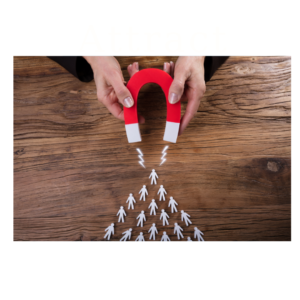
Lead magnets are a great way to get people onto your email list. You give them something of value in exchange for their email address, with the understanding that, by providing their email address, they’re subscribing to your newsletter.
Just be sure to make it crystal clear in your form that, by providing their email address, they’re subscribing to your newsletter. It’s pretty widely assumed at this point, but it never hurts to go the extra mile and make sure you’re all on the same page.
A lead magnet should provide enough value that people want it for its own sake, but not so much value that you feel taken advantage of.
Common lead magnets include:
- Checklists
- Infographics
- Videos
- Short ebooks
- Original research
Get creative. Think about what your ideal clients want that you’d be willing to give them in exchange for an email address, then give it to them.
Pop-Ups

Pop-ups are controversial in the marketing world. Everyone hates them, but marketers swear by them.
Both sides have a point. We’ve all been trying to read something on a website, only to get interrupted by a pop-up. It’s really annoying.
On the other hand, you work so hard to get visitors to your website, the last thing you want is to lose someone who might be interested, but isn’t ready yet because they clicked away and forgot all about you.
A pop-up that offers something that meets a need they have in exchange for an email address is a great way to nurture that lead until they are ready to buy.
I know I’ve gotten clients who found their way to my website, downloaded the lead magnet from the pop-up, and eventually reached out to hire me.
My compromise is that my pop-up only appears when the visitor’s cursor moves to their browser, meaning they’re getting ready to click away. It’s your last chance to capture that lead before they leave, and it reduces the chances of the pop-up getting in the way of them trying to engage with your content.
Social Media Promotion

No one can subscribe to your newsletter if they don’t know it exists.
While asking one person at a time to subscribe to your newsletter can get you steady growth, it’s also slow.
Talk it up on social media. Tell people all the awesome things you’re putting in your newsletter that they don’t want to miss out on.
You can also promote your lead magnet on social media and on your website. Talk about the inspiration behind your idea to create it and what you hope people will get out of it. All they need to do is fill out a short form with their email address to get their own copy.
Partnerships and Collaborations

Just like no one can build a business on their own, no one can build an email list on their own.
Reach out to people in your industry and related industries who would be interested in promoting your newsletter for you in exchange for you promoting their newsletter to your audience.
You can do newsletter swaps in which you write a guest email for their newsletter and they write a guest email for your newsletter. Each one can end with a CTA to subscribe to the author’s newsletter.
Teamwork makes the dream work!
Referral Programs
Your existing subscribers who already love your newsletter could be your biggest word-of-mouth warriors, but they might not know how helpful it could be to you for them to tell their friends and family about this newsletter they love.
So start by asking them to share it. You might be surprised at how many people are willing to do so, just by being asked.
If you want to sweeten the deal, you can give a small reward to anyone who gets you a new subscriber, or put everyone who shares the link to your newsletter in a lottery to win something a little more special. It could be anything from an Amazon gift card to a discount on one of your services.
Including it as the Call to Action (CTA)

I don’t think I’ve ever had anyone read one of my blog posts and immediately call or reach out to get on my calendar, and it’s not because they didn’t like the content.
If someone liked one of my blog posts enough to read all the way to the end, they found some value in it (I don’t write short blog posts.)
So my CTA at the end of my blog posts is rarely an invitation to learn more about one of my services. Instead, I tell people where they can follow me on social media and invite them to subscribe to my newsletter.
Like this:
If you found this content useful and would like to have more like it sent straight to your inbox, you can sign up for our newsletter in the space below. You can also see what we’re up to by following us on LinkedIn and YouTube.
