

If you heard the kerfuffle over Elizabeth Gilbert’s latest book, you probably know that a very vocal subgroup of the population complained about the fact that she chose to set a book in Russia and publish said book while Russia is in the process of invading Ukraine. Regardless of how you feel about the merits of such complaints, the result was that Gilbert decided to halt the process of publishing the book.
Given how long it takes to write and publish a book, I’m sure this book was finished or nearly finished by the time Russia started its invasion last year. There’s no way Gilbert could have known when she started work on the book that it was going to elicit this kind of reaction, — but these are extenuating circumstances. Most of us can test an idea before we turn it into a product or service and launch it.
A different example is another author I heard about who got some feedback from beta readers that she had some problematic portrayals of a minority community in her book She was able to make the necessary changes before publishing, and the book sold well.
Depending on the product you’re thinking of launching, it can take a long time to go from idea to product to launch. If you have a new idea and you’ve been thinking about adding it to your catalogue, there are a few reasons you should consult with your marketing team before you decide to launch.
Table of Contents
Market Research
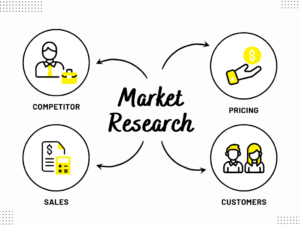
The first reason you should talk to a marketer before launching a new product is so your marketing team can do some market research to make sure the product has a decent shot at earning you a return on your investment. Here are some ways we can do that for you.
Is There a Market for This Product?
The first thing you need to determine is whether there’s a market for your shiny new product. You might think it’s really cool, but your marketing team is going to be concerned with one question: Does it solve a problem?
OK, they’ll be concerned with a lot of questions, but their first question will be to determine if the new product solves a problem. Then all their follow-up questions will be surrounding that question, including:
- How big is the market?
- Are there existing competitors in that space?
- If so, is there room for another competitor?
- What makes your product unique?
- Does the product solve a problem people will pay to have solved for them?
- Who is your target audience?
- Is there an untapped audience within this market that could become your target audience?
- Will existing customers buy this new product from you?
The answers to all these questions will determine whether it’s worth your time and money to move forward with your product. If your marketing team doesn’t think it holds much promise, you’d probably be better off listening to them and moving onto the next idea.
Keep in mind that you don’t necessarily need to answer “yes” to the first problem of “Does it solve a problem?” The history of marketing is full of stories of inventors creating something and then creating a market for it. Henry Ford is famous for having said, “If I had asked people what they wanted, they would have said faster horses.”
Instead, ask yourself if you can “create” a problem that your product solves. People might love a certain toy or tool they have now, but wouldn’t they love it even more if it had more capabilities? Or if it could do its job better and faster?
Many of us have just come to accept small annoyances in our lives because we assume that’s just the way it is. We wouldn’t even think to look for a solution … until someone markets it to us.
Identify Your Target Audience

The last thing you want to do is spend a lot of time and money creating a product, only to tell the wrong people about it. Maybe they don’t have that problem, or they’ve found another way to solve it. Maybe they’d love to solve that problem, but they can’t afford your product.
Your marketing team can help you identify the sweet spot of people who are both willing and able to buy your product and get the word out to them before you even launch, which leads nicely into my next point.
Generate Buzz

If you wait until after your product launches to come up with a marketing strategy, you’re already behind.
A good marketing strategy should start generating buzz for a new product before you even launch it.
For example, one of the best ways to get a book onto the bestseller list is to get as many preorders as you can. That way, by the time the publication date rolls around, you can say the book has already sold hundreds (even thousands) of copies on its first day!
Gilbert may have decided to cancel publication of her book at least in part because she was afraid of a backlash generating the bad kind of buzz about her book before launch day.
Marketing Strategy for Professional Services
A lot of these same tips hold true for launching new services, but there tends to be much less invested in launching a new service. For example, if I want to offer editing services in addition to writing services, all I have to do is write up a sales page offering the service and publish it on my website. If it doesn’t work out I can unpublish the sales page and stop talking about it. Chances are I will have lost little if anything by adding that service to my repertoire.
Not all services are as easy to implement. Some require a certification or a higher level of education before you can start offering them (legal and financial services come to mind). But if you’re thinking of adding another aspect to services you already provide, chances are good you can launch that service and see how well it does without doing much research beforehand.
That said, I always recommend doing at least some research beforehand so you know the best way to let the people who want that services know that it exists. If you need someone to help you with your market research, we’d love to chat with you.
If you found this content useful and would like to have more like it sent straight to your inbox, you can sign up for our newsletter in the space below to make sure you never miss an update. You can also see what we’re up to by following us on LinkedIn, YouTube, Instagram, and Facebook.
