

You work hard to build your email list. You spent the time creating a lead magnet to entice people to subscribe. You invite people to subscribe after reading a blog post or scheduling a meeting with you. You craft enticing headlines and engaging content … only to hear crickets.
Only a handful of people are actually opening your newsletter, and none of them are converting into customers. Were you wrong to think that email marketing was the silver bullet everyone says it is?
The good news is that email marketing can be an incredibly powerful way to get in front of your target audience and lead them through the buyer journey, but only if it’s done right. If you aren’t getting the results you want from your newsletter, take a look at some of the most common mistakes people make when it comes to their newsletter and see if any of them sound familiar.
Table of Contents
- Your Expectations for Your Newsletter Are Too High
- Going Straight for the Hard Sell
- Not Know Your Audience
- Not Segmenting Your Audience
- Sending Newsletters Too Frequently
- Not Sending Newsletters Often Enough and/or Not Regularly
- Failing to Optimize for Mobile
- Using Sketchy Email Marketing Tactics
- Not Having a Call to Action
- Ignoring the GDPR
- Not Paying Attention to the Analytics
- Not Doing A/B Testing
- Writing Weak Subject Lines
1) Your Expectations for Your Newsletter Are Too High

It’s important to keep in mind that an open rate of about 30% (give or take) is pretty standard, depending on your industry. I know it’s frustrating to work so hard on building your email list and crafting and sending out those emails, only to have the majority of that list ignore your emails, but that’s typical.
Just remember that there is still value in people deleting your emails without opening them. If they aren’t unsubscribing, it means they do still want to hear from you, and every time they delete your emails, they have to at least look at your brand name, if not also look at the headline. That reminds them you’re still around, providing excellent products/services.
The same goes for people who are opening your newsletter but not clicking through to your website or taking that final step to becoming customers. They might not be ready to buy just yet, but reading your newsletter will reinforce the idea in their minds that you’re the expert in your industry, so when they are ready to buy, you’ll be top of mind.
2) Going Straight for the Hard Sell

A lot of people make the mistake of thinking that if someone signs up for your newsletter, it must mean they want to buy from you, but that’s not necessarily the case. They might not be ready to buy what you’re selling, but maybe they want to hear more about what you provide/how you help your customers, or make sure you really know what you’re talking about.
This is especially true of B2B industries and professional service industries (such as attorneys and financial planners), which tend to have a longer buyer journey before prospects are ready to take that final step to becoming customers. Those audiences want to make sure you really know what you’re talking about before they buy from you, and many of them will sign up for your newsletter as a way to verify that you really are an expert in your field.
So make sure your newsletter provides value and demonstrates your expertise. Tell them how they can do certain things for themselves, and let them know when they’re better off calling in an expert.
The exception to this rule is ecommerce shops, especially ones that sell products that are low cost and/or necessary, such as clothing, hygiene products, etc. People are more likely to buy those kinds of products directly from an email, so feel free to go ahead and include a “buy now” button in your newsletters
3) Not Knowing Your Audience

Identifying your target audience and knowing what makes them tick is the first step in any marketing campaign, and it should be the focus of every step taken throughout the campaign. Too often marketers and small business owners lose sight of the target. They get so wrapped up in an exciting new development in their industry or a new product/way of doing things, that they forget what really matters to the people they’re trying to reach and convert into customers.
Every time you go to create a newsletter, take a moment to stop and look at your audience personas. Who are they? What are their pain points? What will interest them enough to open your newsletter? What will entice them to click through to your website or take the final step to becoming a customer?
4) Not Segmenting Your Audience

Even small businesses tend to serve different audiences. I’ve created content for all kinds of different industries, and I’ve worked with small-to-medium-sized businesses ranging from solopreneurs to agencies.
Each of those audiences will want to see different newsletters with different headlines, different content, and different calls to action. By segmenting your email list, you can be sure to send people only the content in which they’re interested, thereby increasing the chances they’ll actually open your email (and hopefully take the next step in the buyer journey).
You can segment your audience based on the kind of content they consume before subscribing. For example, if someone were to subscribe to my newsletter after reading this blog post, it’s safe to assume they might be interested in my newsletter writing services, so any time I publish content about email marketing or have a special promotion for my newsletter writing services, I can send them to that list and leave out the people who expressed interest in my ebook writing services.
5) Sending Newsletters Too Frequently

Newsletters sometimes get a bad reputation from the companies that flood people’s inboxes with emails. If it becomes a chore to delete all the emails you’ve been sending, you’re sending too many.
Large corporations can (sometimes) get away with sending daily newsletters, but for small businesses, not only is that too much work for too little payout, it’s also more likely to turn people off than convert them into customers.
I send out my newsletter once a week, and I know some small business owners who only send out one or two per month and that’s fine. If you don’t have something to say, there’s no point in taking up space in your subscribers’ inbox just for the sake of being able to say you sent out a newsletter today/this week.
6) Not Sending Newsletters Often Enough and/or Not Regularly
That being said, there is such a thing as sending newsletters too infrequently. If your newsletters are sent so far apart your subscribers have forgotten who you are (or that they ever subscribed), it’s been too long. As with blogging, I think frequency matters less than consistency. If your subscribers know they’re going to get an email from you in their inbox every Tuesday morning, then make sure they get an email in their inbox every Tuesday morning.
If you only send one or two newsletters per month, make sure you maintain a consistent schedule, and make sure it’s never less than once a month. People have short attention spans and we get a lot of content thrown at us, so if it’s been more than 30 days since we last heard from you, chances are good we’ve forgotten who you are.
7) Failing to Optimize for Mobile

We are living in an increasingly mobile world. As people get used to the idea that they can do everything from check their email to access airline tickets on their phones and tablets, they’re choosing to do so more and more. That means our content needs to be easily accessed and viewed on mobile devices, and that includes our newsletters.
If you have not already done so, subscribe to your own newsletter, and when it shows up in your inbox, open it on a mobile device to make sure it displays correctly. If the words run off the side of the screen, you have a problem that needs to be addressed.
Ideally, you should check it on as many different kinds of devices as you can: tablets, iphones, android phones, etc. Your newsletter might show up just fine on an iphone, but have problems on an android or vice versa, so do your research.
8) Using Sketchy Email Marketing Tactics

I know it’s hard to build an email list, but don’t give in to the temptation to buy one. If you have to buy their email address from a third party, there’s no guarantee they’re part of your target audience, and so you’re less likely to get them to engage, much less convert into a customer.
Additionally, email marketing platforms like MailChimp and Constant Contact don’t allow their users to buy email addresses from third parties. You can load them into your email marketing platform manually, but if they find out about it, they could delete your account or even blacklist your domain.
Also keep in mind that certain words in your headline could get your newsletter sent straight to the spam folder before your subscriber ever sees it. This is mostly true of words that have anything to do with money, such as “Free”, “Cash”, “Get Paid”, “Dollars”, “Price”, “Big Bucks”, etc. Be sure to avoid those kinds of phrases if you want to make sure your emails are getting in front of their intended recipients.
9) Not Having a Call to Action

Every piece of content you create for your business needs to have a goal, and that includes your emails. Where are your readers in the buyer journey? What can you say/do to encourage them to take the next step in the buyer journey? What are they willing to do at this point, and what might be asking too much (or too little)?
I mentioned before that going for the hard sell in your newsletter can be a bad move, but that doesn’t mean you shouldn’t have any call to action at all. You can encourage your subscribers to follow you on social media, watch a marketing video you just released, read your book, attend a webinar, etc. Your marketing campaign should involve much more than just your newsletter, so take some time to think about your target audience and what other content they could consume that will get them one step closer to becoming a customer.
10) Ignoring the GDPR
The GDPR is a law that went into effect in the European Union back in 2018 and it stands for General Data Privacy Regulation. It makes it illegal to require someone to give you their email address in order to access a certain piece of content (i.e. a lead magnet, such as a checklist or a short ebook).
Even if you’re not actively targeting prospects from the European Union, you might be surprised to find that people from all over the world might be interested in your content and subscribing to your newsletter. You don’t want to get slapped with a fine, so it’s best to play it safe and ditch the lead magnet.
11) Not Paying Attention to the Analytics
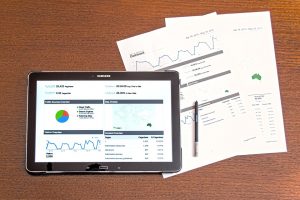
I mentioned above the importance of maintaining reasonable expectations, but you can’t know if you’re meeting or exceeding your expectations if you don’t pay attention to the analytics. How many people are opening your newsletter? Are they the same people every time, or does it vary? How many of those people are taking your call to action? Which calls to action are they taking? If you don’t know the answers to these questions, you can’t improve the effectiveness of your newsletter.
Email marketing management systems, such as MailChimp and ConstantContact, give you a lot of data when it comes to who’s opening your newsletter and when. Taking just a few minutes each week to go over the data can tell you a lot about your audience, so take advantage of all that data. Especially since it’s free.
12) Not Doing A/B Testing
Along with the need to take a look at your analytics is the need to run some tests every now and then. You might think you’ve crafted the perfect headline, but what if you made a few slight adjustments? Would that get more opens? Or would the original headline get a higher open rate? You won’t know until you test the two side by side, so go ahead and run some A/B tests and then check your analytics.
13) Writing Weak Subject Lines

There could be several reasons why people aren’t opening your newsletter, but the most likely culprit is your headline. Start with a headline analyzer, such as the one offered by CoSchedule, to make sure it has all the elements of a good headline. Then go back to the above section and do some A/B tests to make sure your audience reacts as positively to the headline as CoSchedule’s analyzer.
Speaking of newsletters, if you found this content useful and would like to receive more of it, you can sign up for our newsletter in the space below to make sure you never miss an update. You can also see what we’re up to by following us on LinkedIn, Instagram, YouTube, and Facebook.
